The verification gap
How often teams close findings without verifying them, and why leaders already know it's happening.
Nearly half of enterprise security teams close vulnerability findings without fully verifying them. And not because of carelessness; there are simply more findings than hours in the day.
Now AI is enabling attackers to work through known vulnerabilities faster than ever, which raises the stakes on every finding that goes unchecked. 72% of security teams worry something real is hiding in their backlog.
We surveyed over 200 security leaders and practitioners to find out how teams are handling the gap between findings and verification, and what changes if the backlog ever hits zero.
How many teams close findings without verifying them, and what the findings they do check turn out to be
Why more scanners lead to less verification, not more
How AI is adding to the backlog while helping teams clear it at the same time
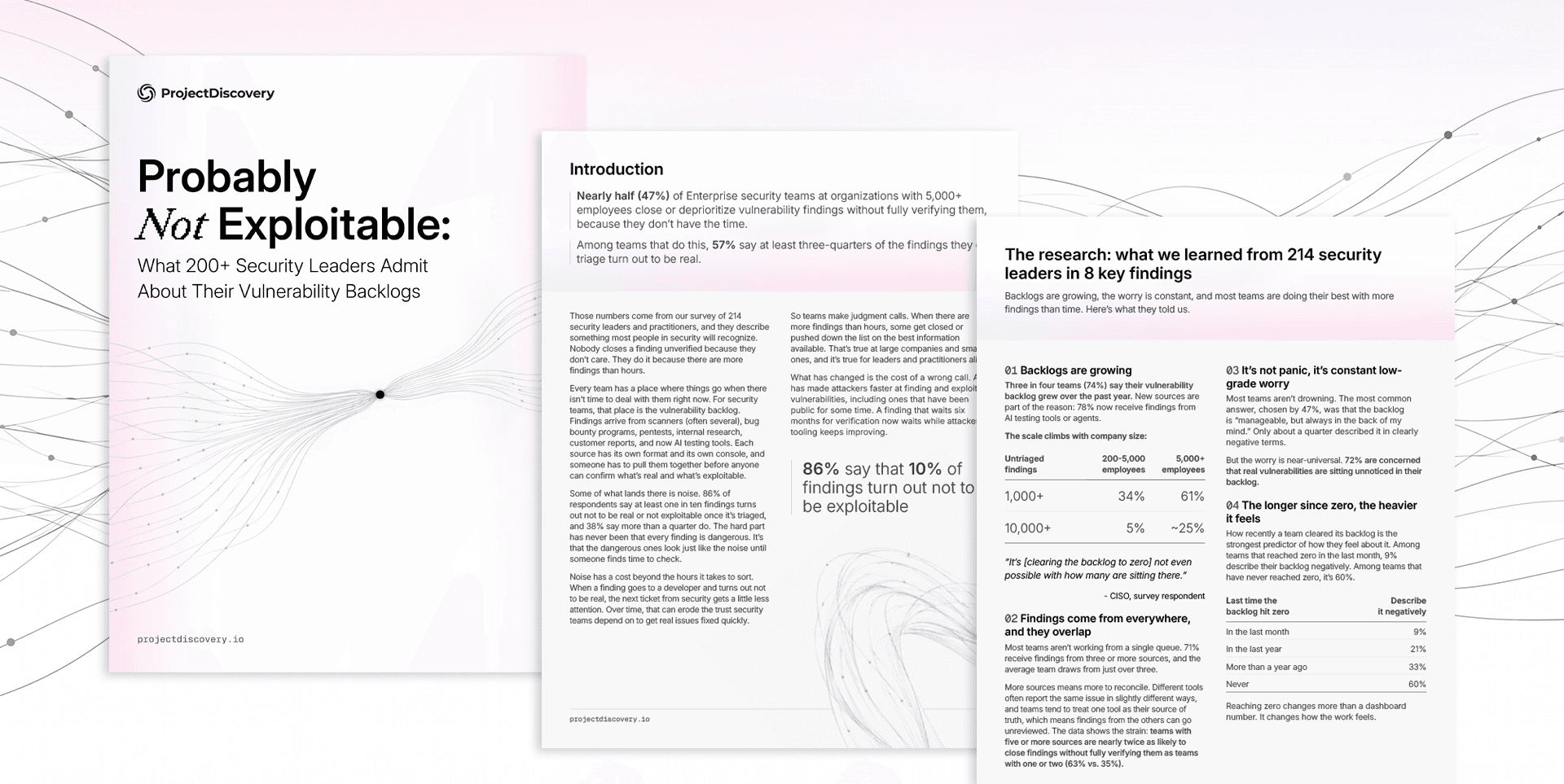
Learn how security teams really feel about their vulnerability backlogs, why the cost of an unverified finding has gone up, and what separates teams that reach zero from teams that never do.
How often teams close findings without verifying them, and why leaders already know it's happening.
Why teams with five or more finding sources are nearly twice as likely to skip verification.
How AI changed the cost of a wrong call, and how it's helping teams keep up.
Why teams that recently cleared their backlog feel so differently from teams that never have.
It's not even possible [to triage] with how many are sitting there.
— CISO, survey respondent
The question isn't whether your backlog has noise. It's whether you can tell what's real before someone else does.
Download the report to see how 200+ security teams are handling the gap between findings and verification, and what it takes to get to zero.
We use tools on this site to collect and record your data (e.g., your searches), which we and our vendors may use to provide, improve, and personalize our offerings, make recommendations, and for analytics and marketing. Some of these tools identify visitors and link website activity to business contact and company information so we can better understand interest in our services and tailor our outreach. We may share your data with third parties, such as advertising vendors, social media companies, and research partners, which may be "targeted advertising," "selling," or "sharing" under applicable privacy laws. Continuing to browse our site means you accept these terms and our Privacy Policy. To opt out, click the Your Privacy Choices link in the footer.