Today we're releasing Neo Triage, an autonomous engine for vulnerability triage. While other tools rank your backlog, Neo clears it. It ingests the reports coming in from your scanners, pentesters, and bug bounty researchers, tests each one against your environment, and tells you which ones are real.
It's free and available to every security team starting today, and you can run it in our cloud, in your own sandboxes, or on-prem.
The bottleneck hasn't gone anywhere
Finding vulnerabilities used to be the hard part. That's no longer the case.
AI agents probe applications overnight. Researchers point models at bug bounty scopes. Scanners ship new checks the day a CVE drops. Each of those produces reports, and every report lands in the same place: in front of a person who has to figure out whether it's real.
Finding issues got cheaper, but every report still needs someone to sit down and work through it. Teams can't hire their way out of that, so the backlog keeps growing. Some of it is noise, but you don't know which part until you check. In the meantime, the real issues get harder and more expensive to find.
Zero inbox for the first time ever
Most triage tooling stops at ranking. Scanners score findings, platforms prioritize them, and AI assistants sort them by how severe they look. The backlog gets better organized, but it's all still there.
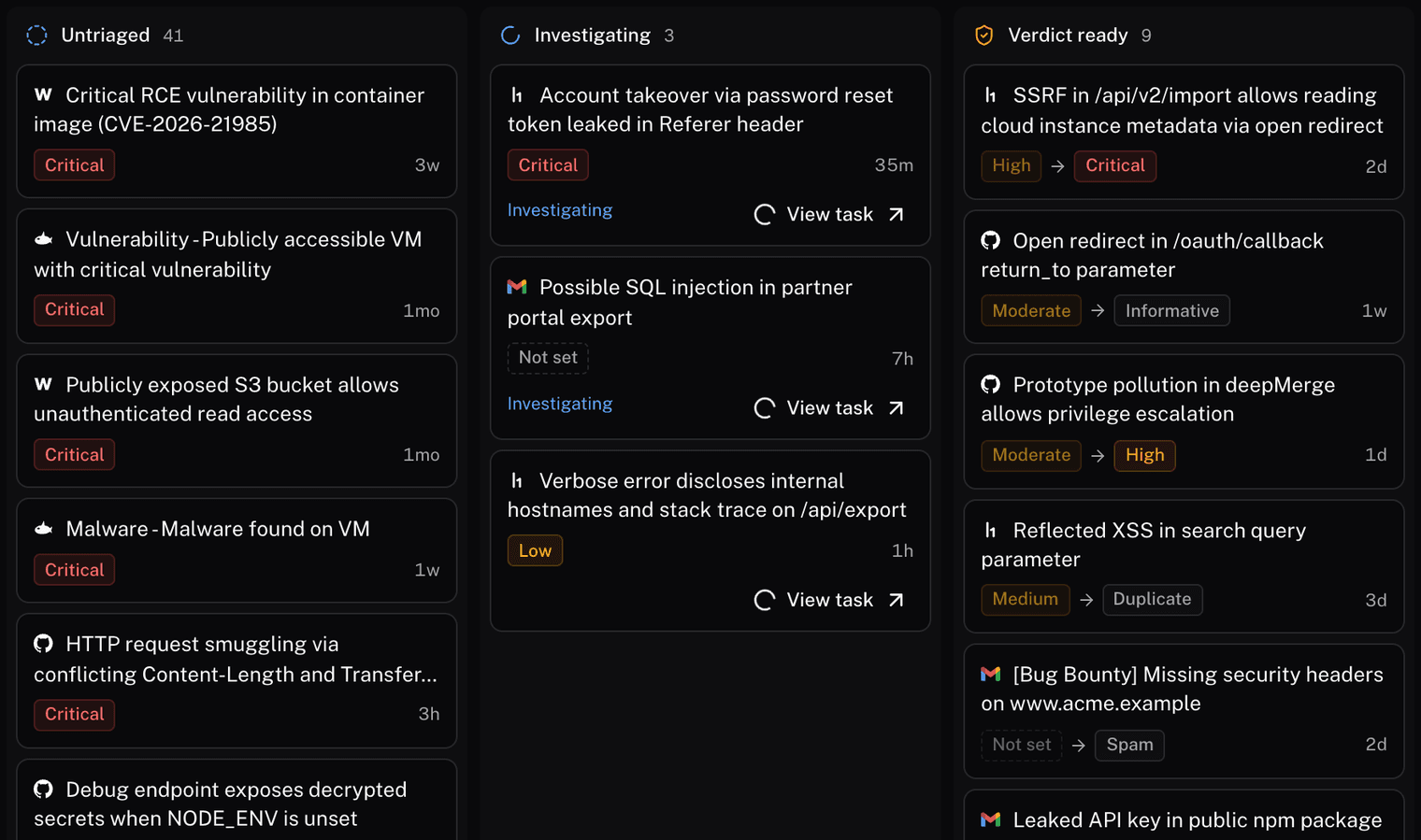
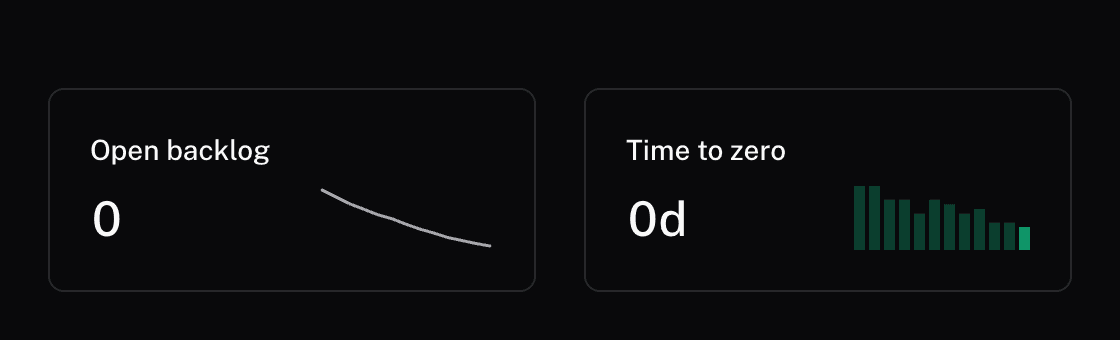
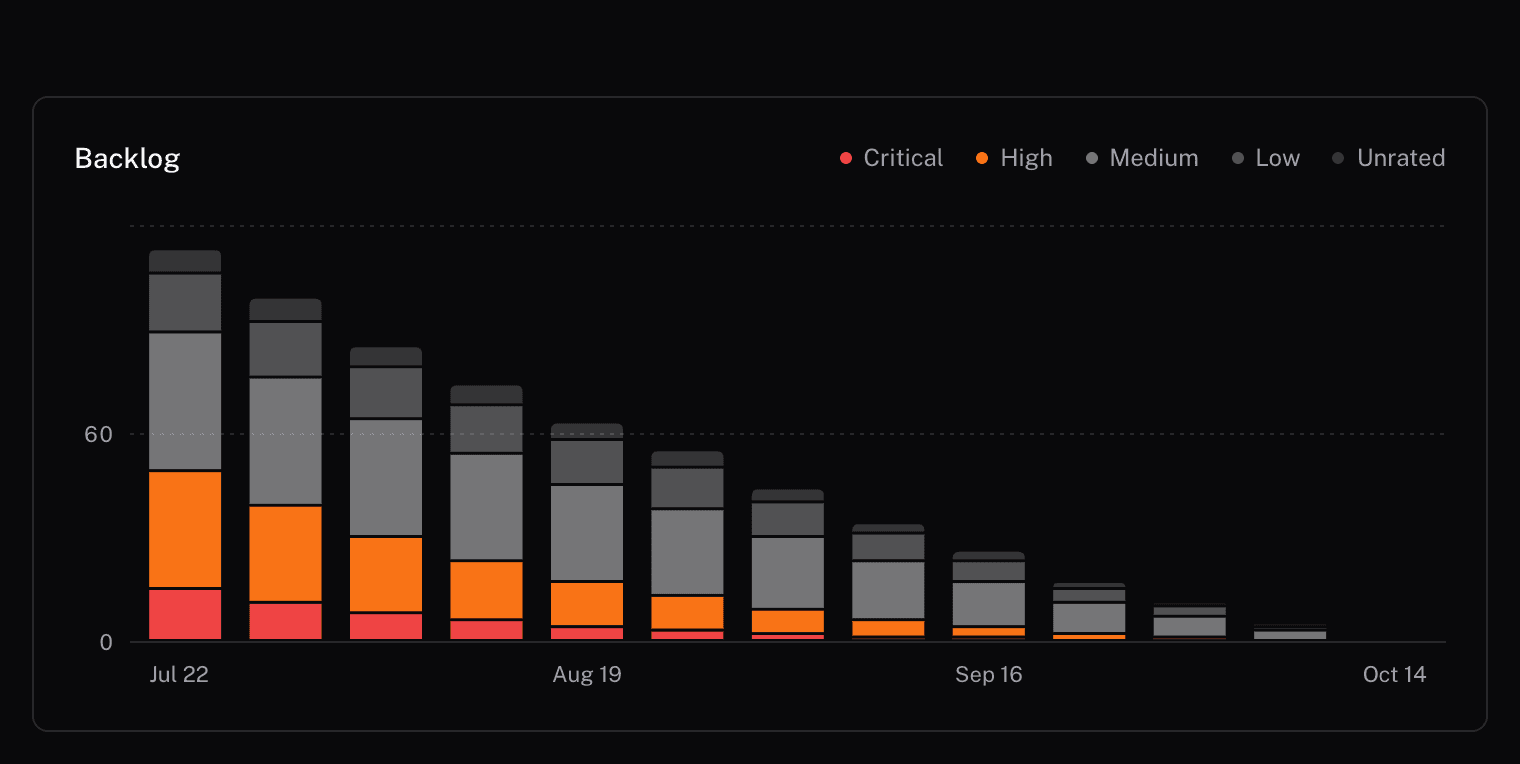
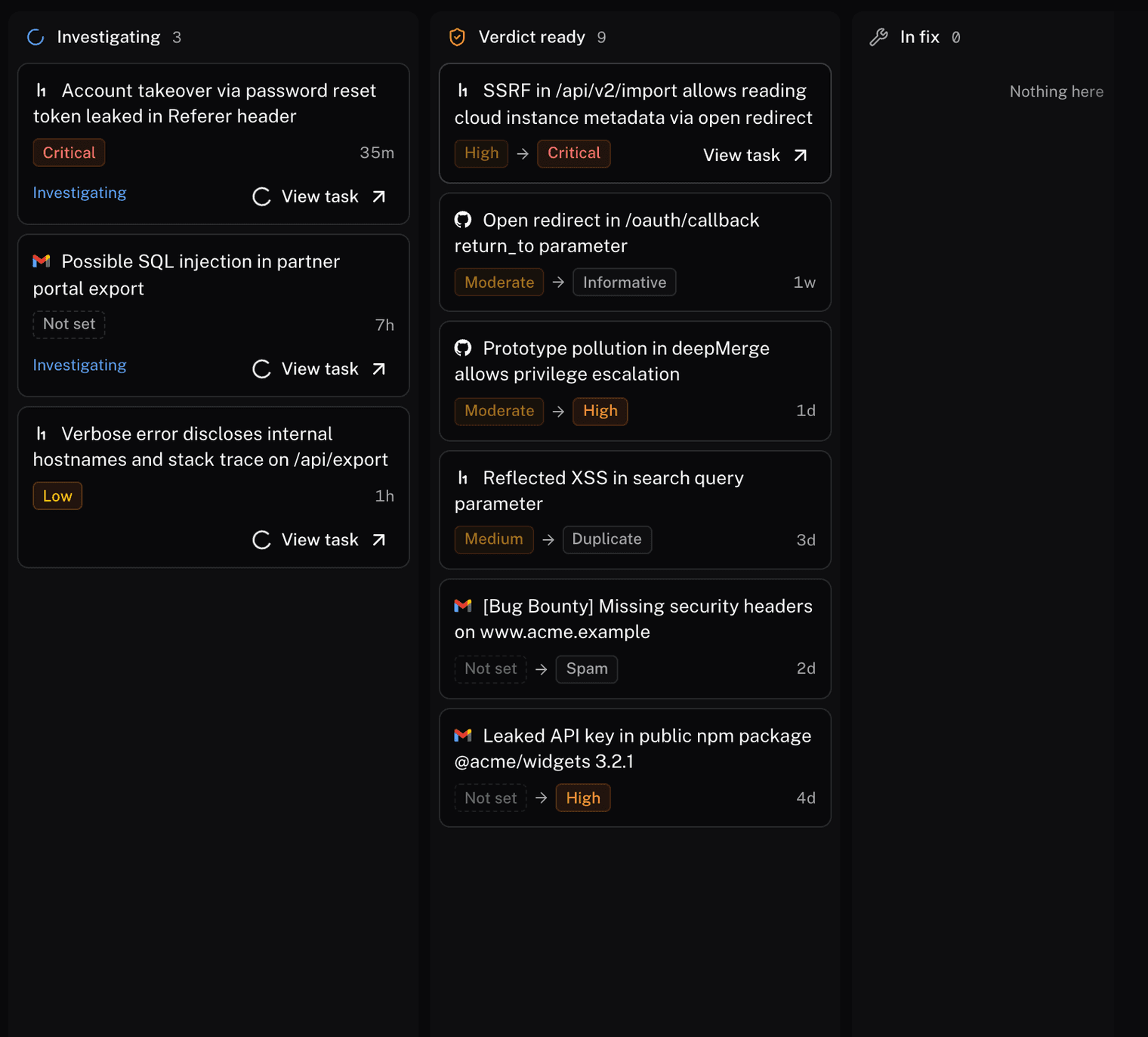
Neo is built to get you to zero. Every report gets a verdict: confirmed and ranked with proof, merged into an existing finding, or closed with the reasoning attached. Nothing sits in the queue waiting for someone to get to it, and Neo shows you how long it'll take to reach an empty inbox.
Neo tests. It doesn't guess.
Getting to zero only works if every verdict is right. Most AI triage today is a model reading a report and judging whether it sounds plausible. We can think of this as a “classifier”. It's fast, but it fails in exactly the cases that matter: a convincing write-up of something that isn't exploitable, or a sloppy report of something that is.
Neo solves this by checking the claim at runtime. For each finding, Neo looks at your environment, works out what it would take to reproduce the issue, and tests whether it's real. When Neo confirms something, it's because it saw it happen.
This is the difference between “exploitable in the wild” and “exploitable in my environment”.
What Neo does with every report
Neo handles the full triage loop, from intake to the reply.
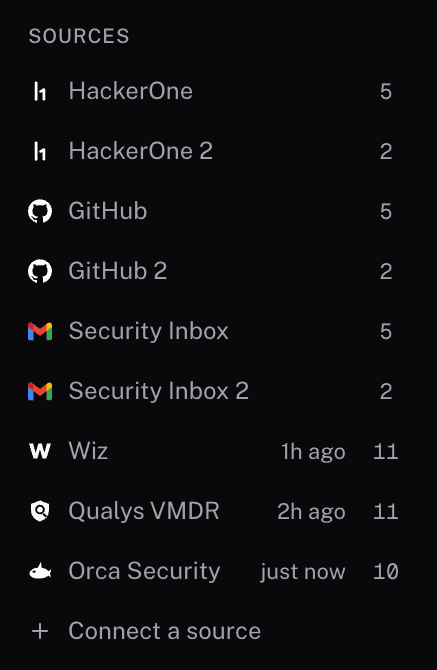
- Connects to the tools you already use. Point Neo at your scanners, bug bounty platform, or ticketing system. It reads their API docs and sets up the integration itself.
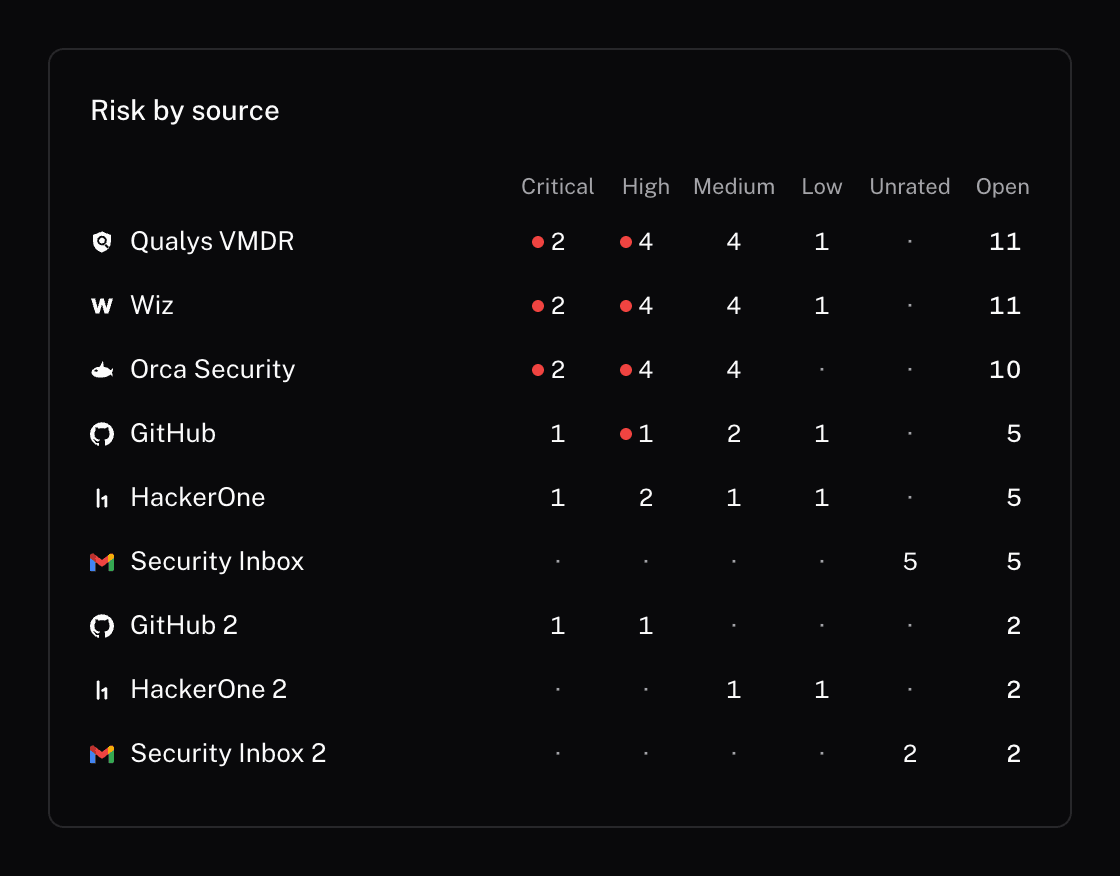
- Puts your whole backlog in one place. Every report from every source, with a live view of how fast it's shrinking.
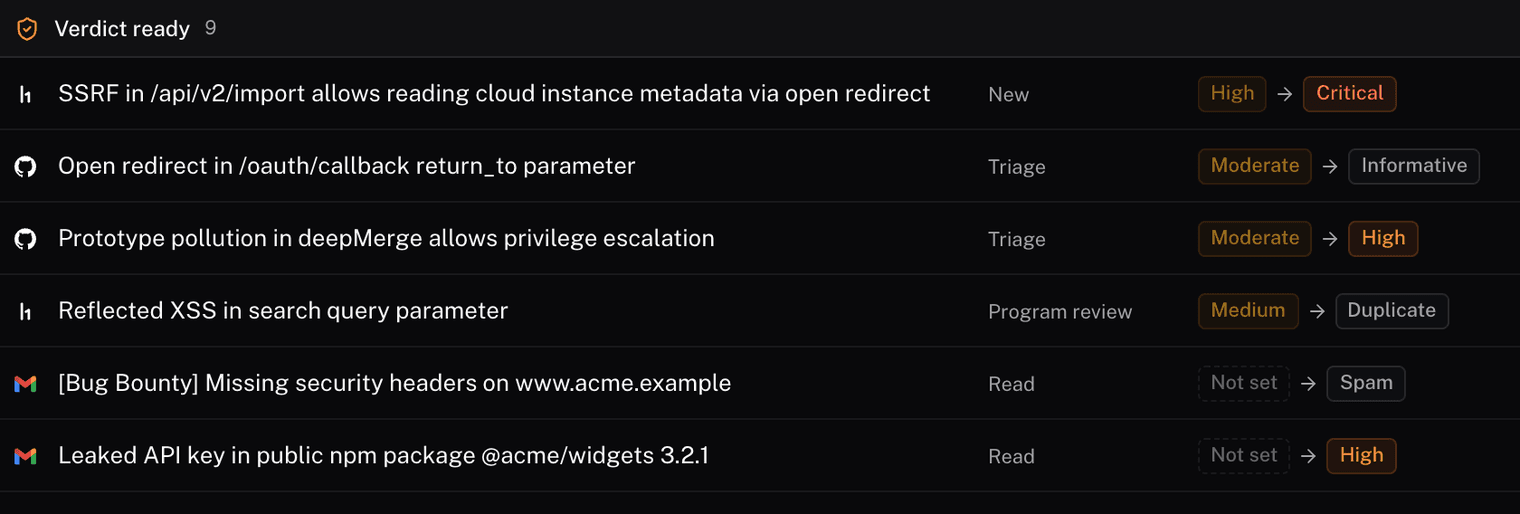
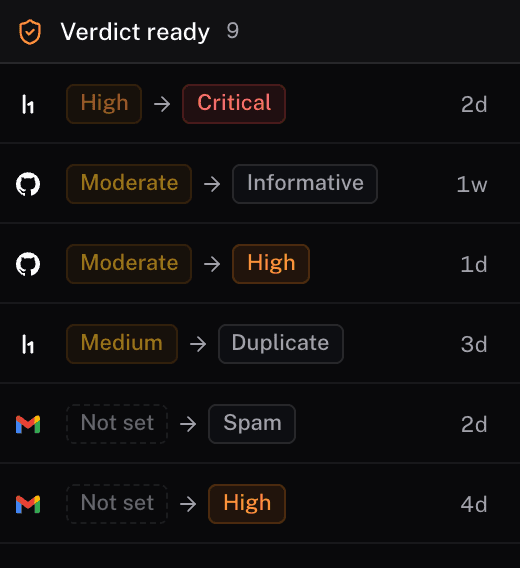
- Ranks real issues by impact. Severity reflects what's actually exposed in your environment, not a generic score.
- Merges duplicates. The same issue reported three different ways becomes one finding.
- Closes the noise. Reports that don't hold up get closed, with the reasoning.
- Hands you proof and a reply. Confirmed issues come with evidence, the right severity, and a response to the reporter ready to send.
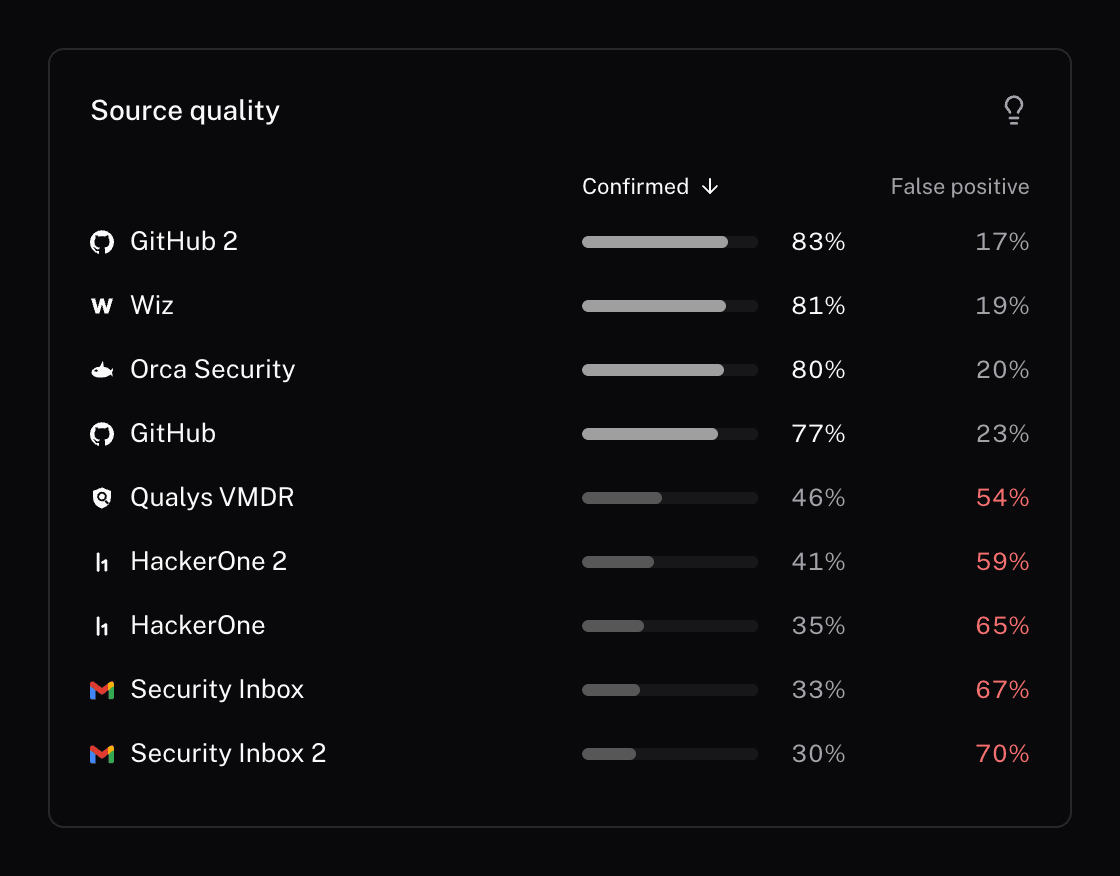
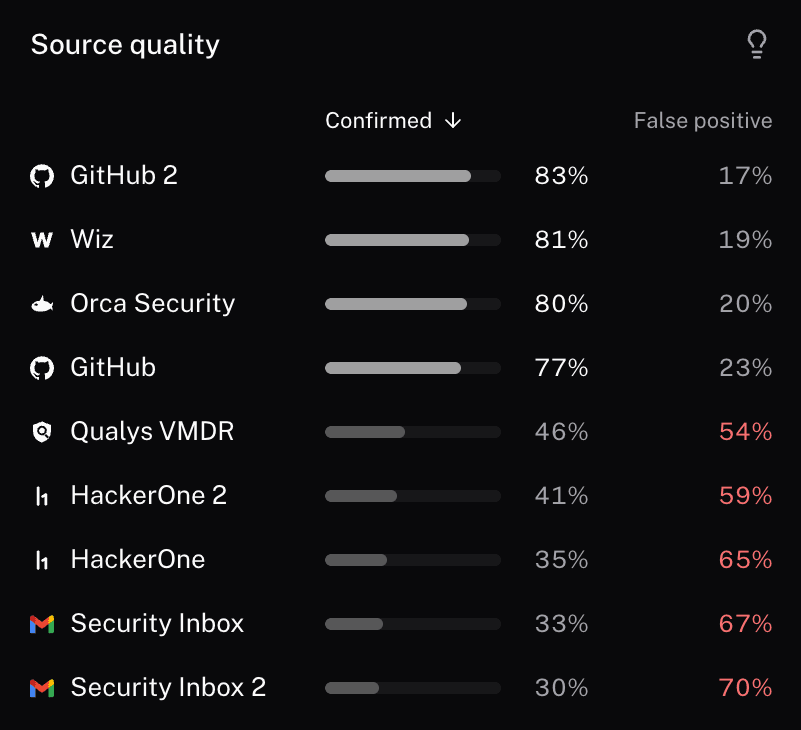
- Learns from every decision. Neo picks up on your calls over time, including which sources you can trust. Triage -> memory -> context.
A report, start to finish
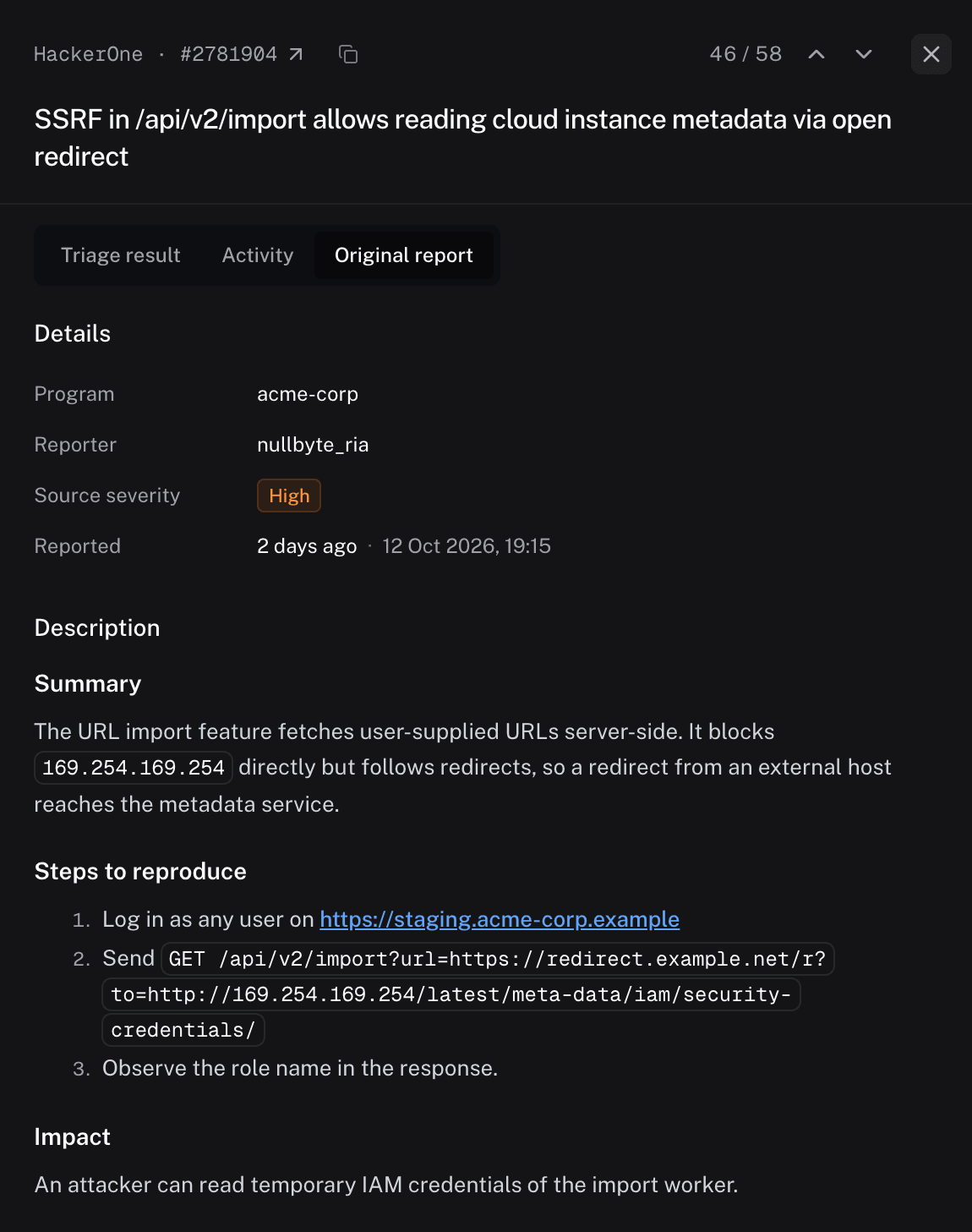
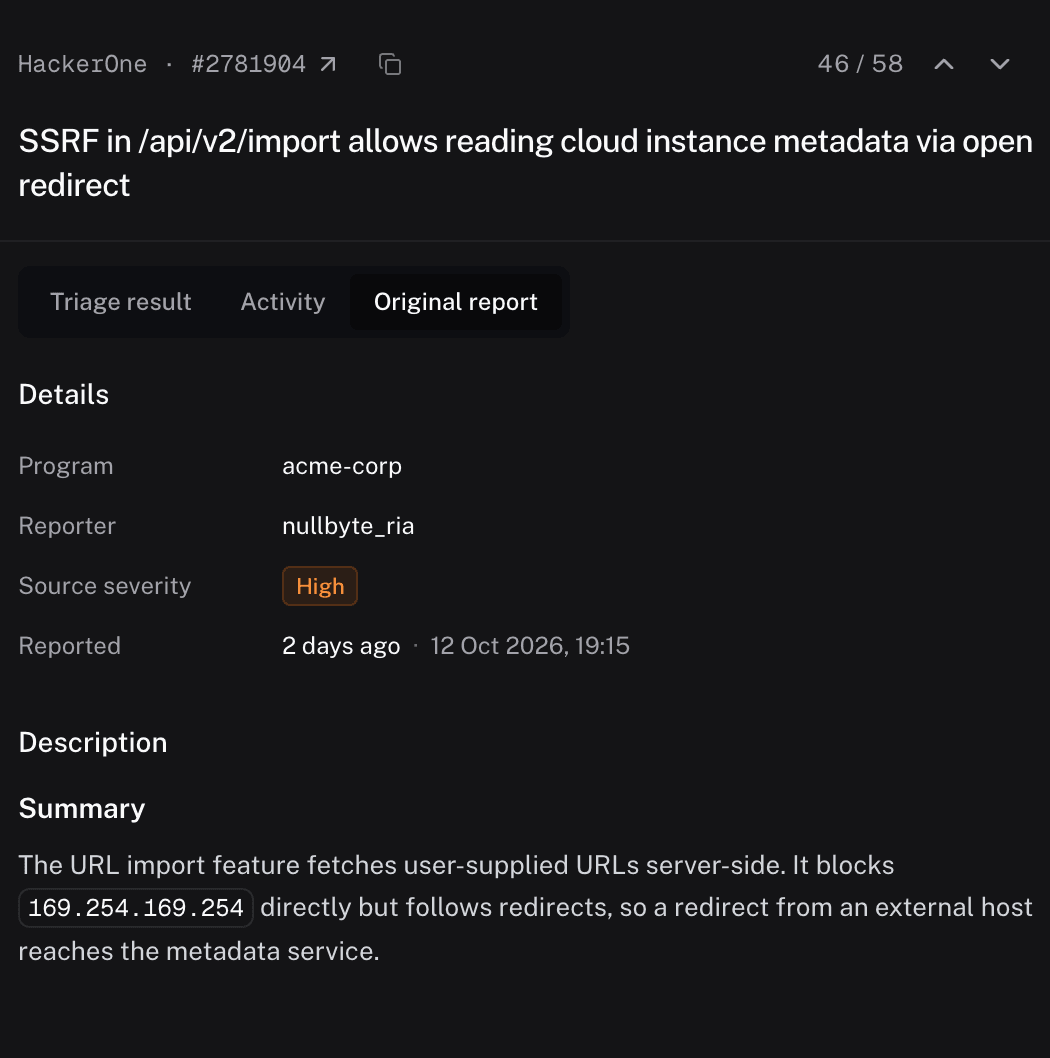
- The report as it came in, and where it came from
- What Neo checked in the environment
- What it found when it tested the claim
- The severity it assigned, and why
- The reply it drafted for the reporter
Keep it running
Clearing the backlog once isn't enough if it starts filling back up immediately. Neo can turn your triage workflow into an automation that runs on a schedule or the moment a new report lands, and pings you when something critical comes in.
New reports get handled as they arrive instead of waiting for someone to get to them.
How we handle security
Neo tests findings against your environment, so it's fair to ask what happens to your data along the way.
Neo runs under zero data retention (ZDR). Your reports, findings, and environment data aren't retained by the models Neo uses or used to train them. Every test runs in its own sandbox, isolated from other tests and from your other environments.
Availability
Neo Triage is available today, free, for every security team.
ProjectDiscovery started with Nuclei, a scanner anyone could run, read, and improve. That openness is how it earned the trust of the security community, and we're bringing the same approach to triage. You shouldn't have to sign a contract to find out how much of your backlog is real.
Getting started
Sign up at neo.projectdiscovery.io, connect your first source, and Neo will start working through your backlog. Setup details are in the docs.
Clear your backlog. Your reports. Your inbox. With Neo.